
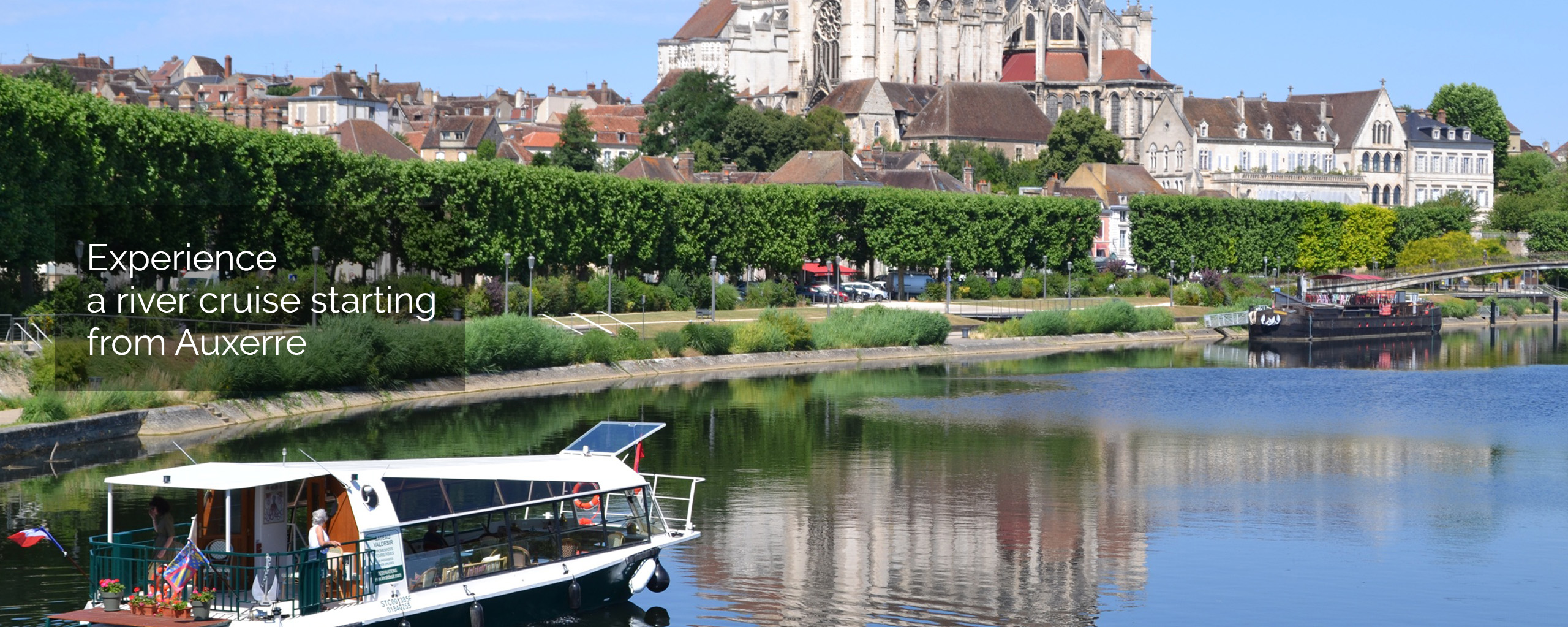
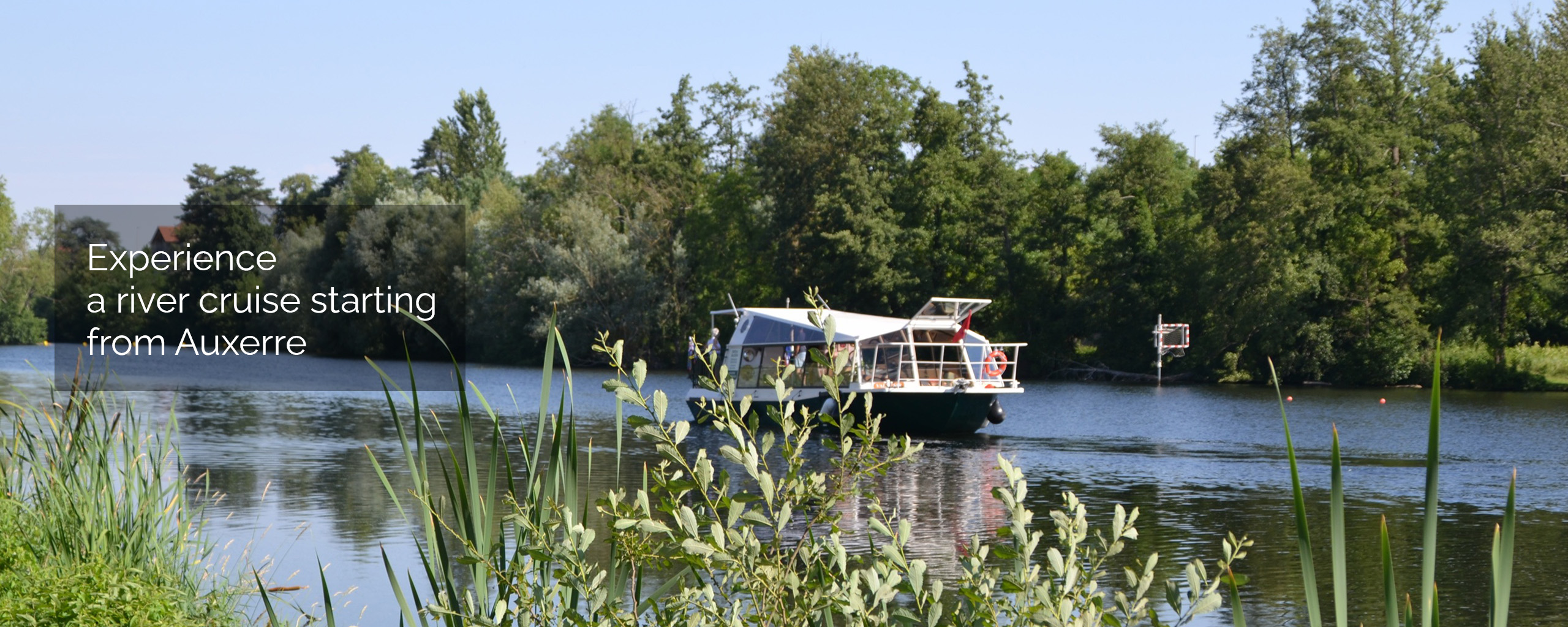
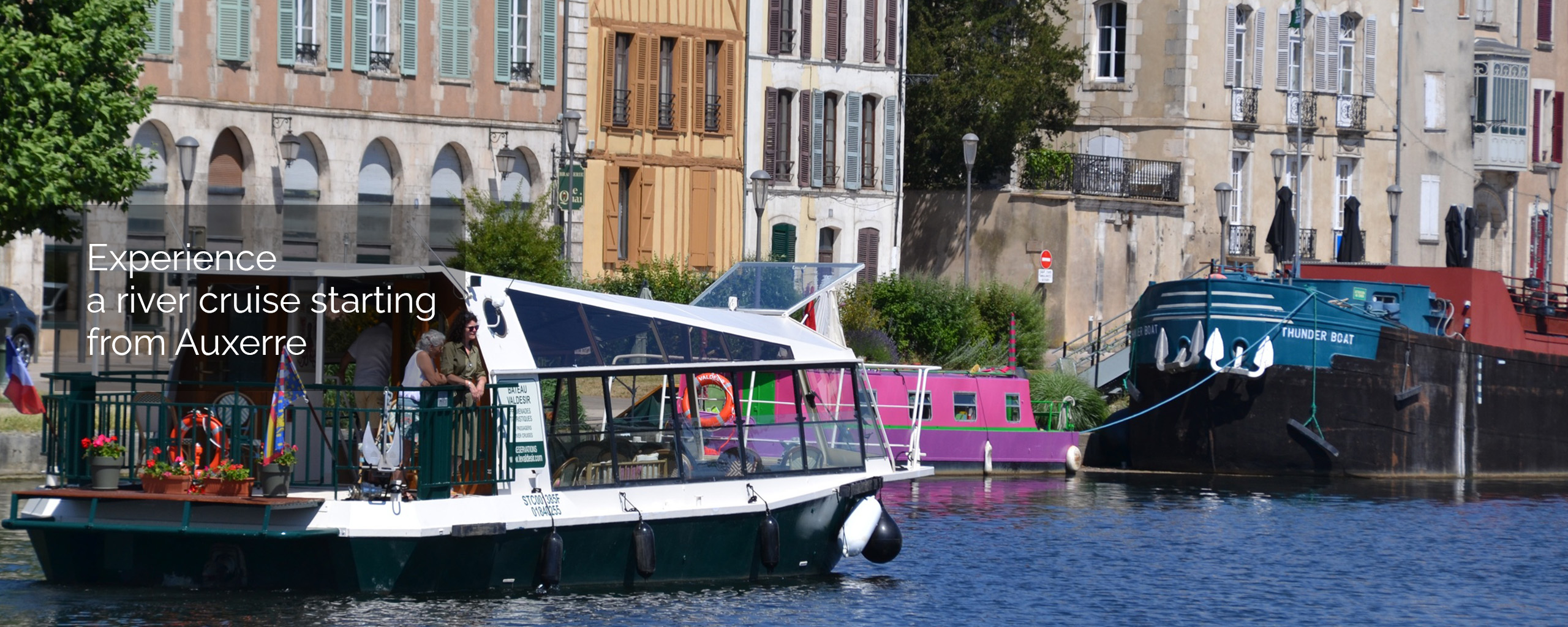
Auxerre is listed as a remarkable site and recognised as a town of art and history, revealing its full beauty from the water.
Enjoy a magnificent panorama of its historic skyline, riverside heritage and natural surroundings.
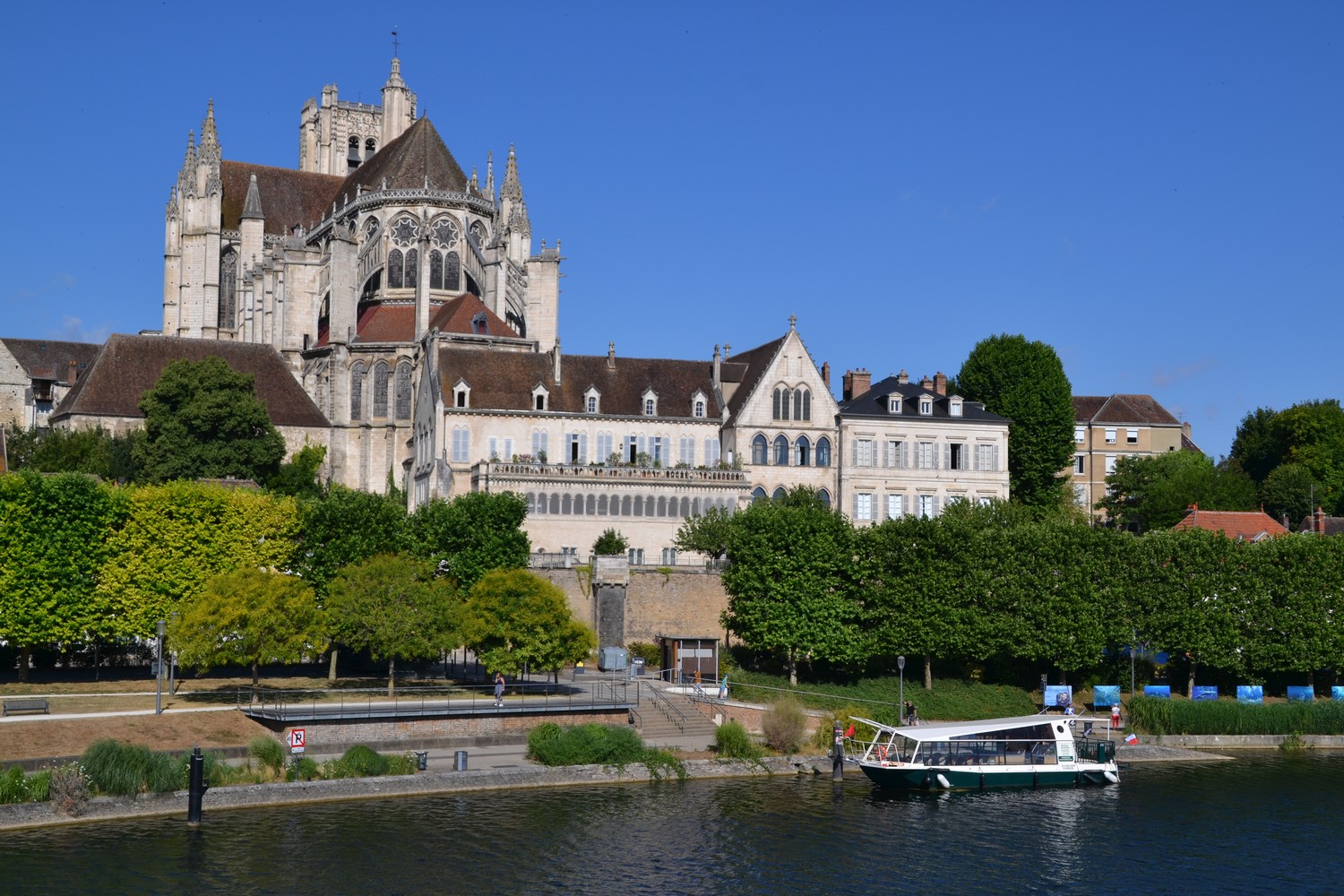
SAINT ETIENNE CATHEDRAL
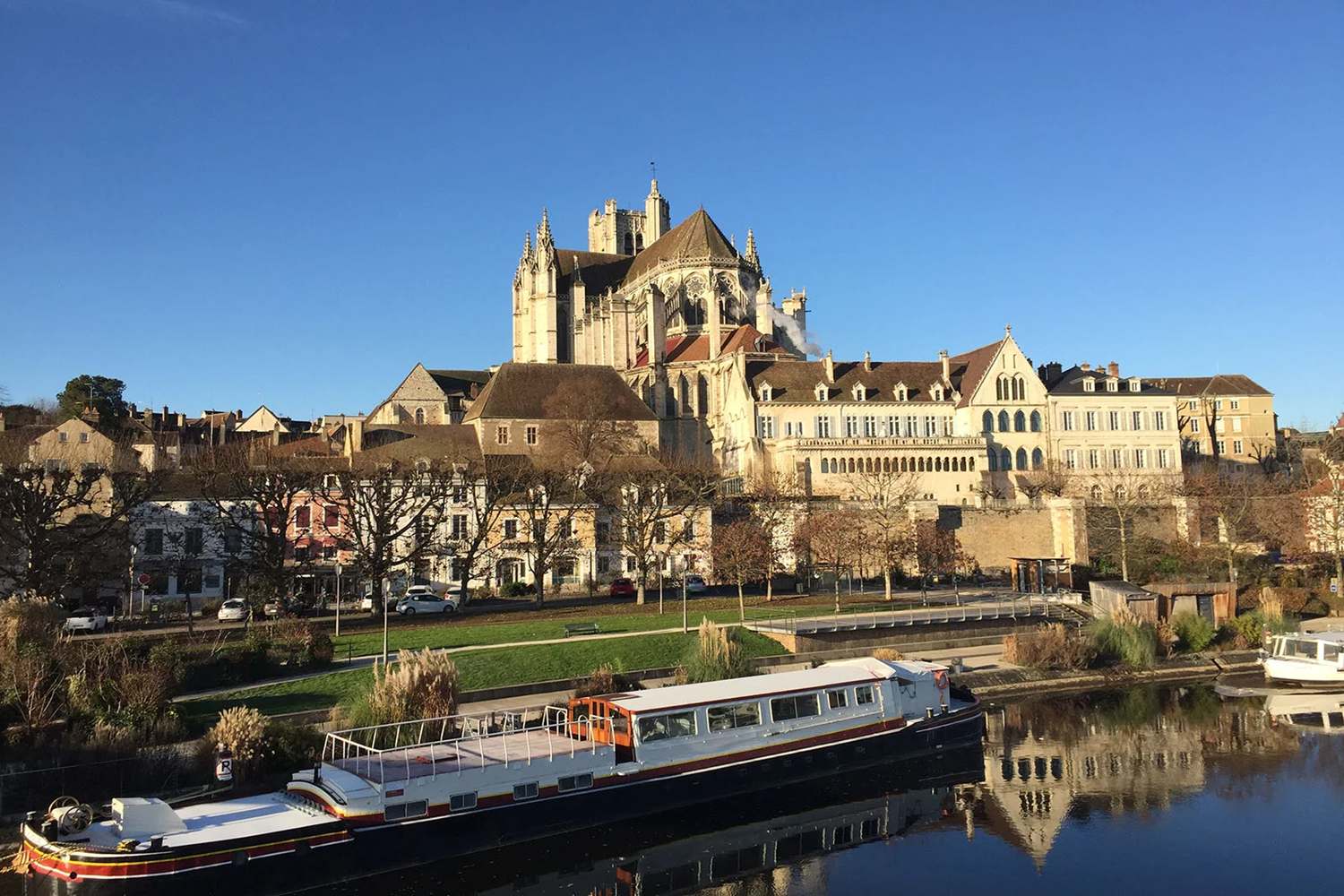
Saint-Étienne Cathedral is the emblematic landmark of the city of Auxerre and majestically overlooks the banks of the Yonne.
Built between the 13th and 16th centuries, it is a remarkable example of French Gothic architecture.
From the river the cathedral’s silhouette offers a spectacular panorama that has made Auxerre famous.
The cathedral is listed as a historic monument and is a must-see for visitors to the region.
It blends harmoniously into the landscape of the quays, old houses, and the banks of the Yonne.
Whether you discover Auxerre from a boat or on a stroll through the city, Saint-Étienne Cathedral is a true jewel of Burgundy’s heritage.
THE QUAYS OF AUXERRE
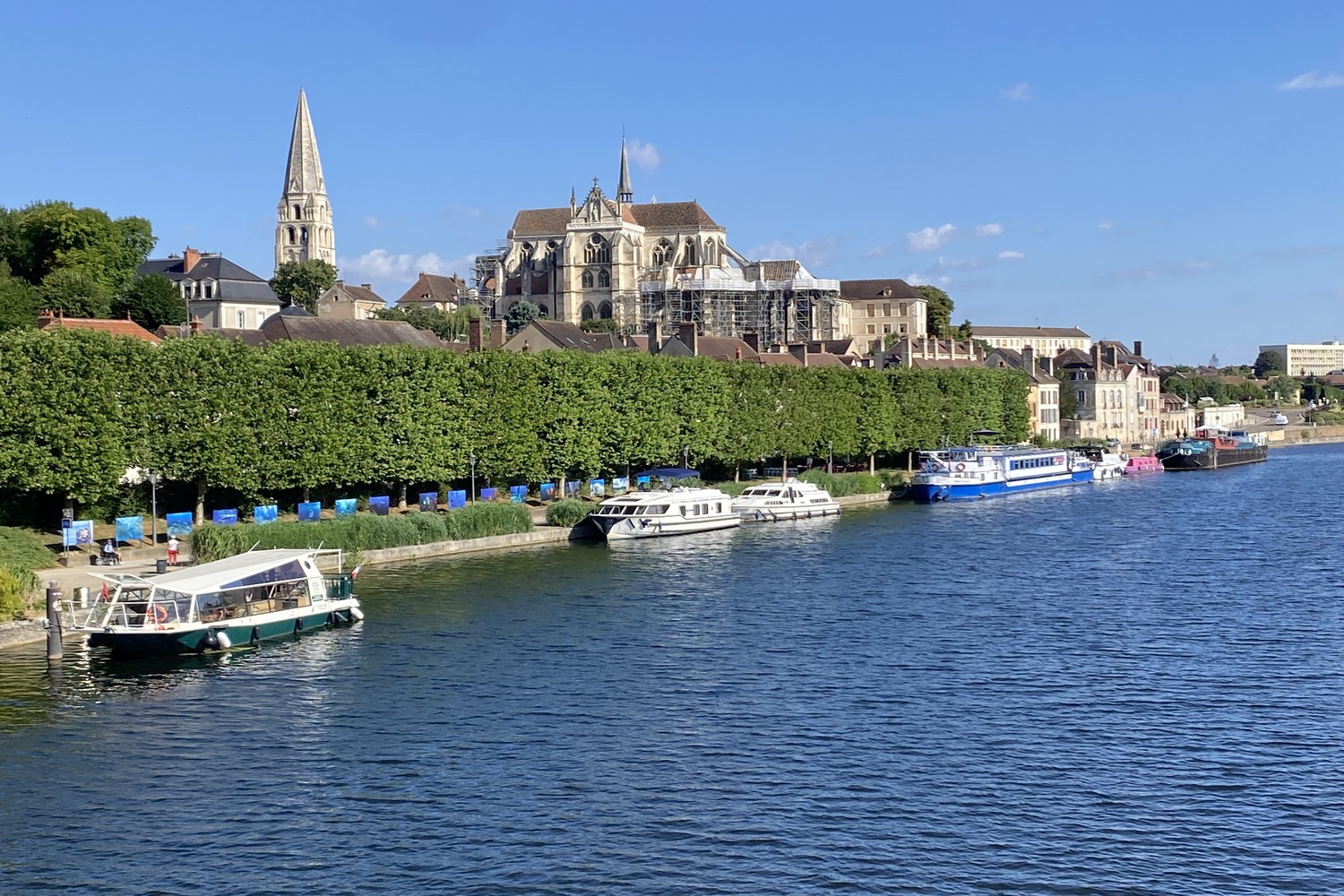
The quays of Auxerre offer one of the most beautiful riverside panoramas in France, with fine views of its iconic steeples: Saint-Étienne Cathedral, Saint-Germain Abbey and Saint-Pierre Church. These quays were once the domain of boatmen, merchants and water tradespeople who brought the river to life. In the 17th century, the Yonne was used to transport Burgundy wines to Paris. After a period of neglect, the quays were entirely renovated in the 2010s, restoring them to their former glory. The marina, the largest in the region, now welcomes pleasure boaters from across Europe.
SAINT-GERMAIN ABBEY
Saint-Germain Abbey stands as the most majestic monument in the landscape. Built upon a natural amphitheatre, it dominates the left bank of the river. Its origins date back to the 5th century, when it was founded by Saint Germain of Auxerre, bishop of the city. It was subsequently rebuilt by Queen Clotilde, wife of Clovis, then enlarged in the 9th century under Charles the Bald. Its architecture blends Carolingian, Romanesque and Gothic styles in harmonious fashion. Its crypt contains the oldest mural paintings in France. Seen from the water, its silhouette is reflected in the Yonne, offering one of the finest views to be enjoyed whilst boating through Burgundy.
SAINT-PIERRE CHURCH
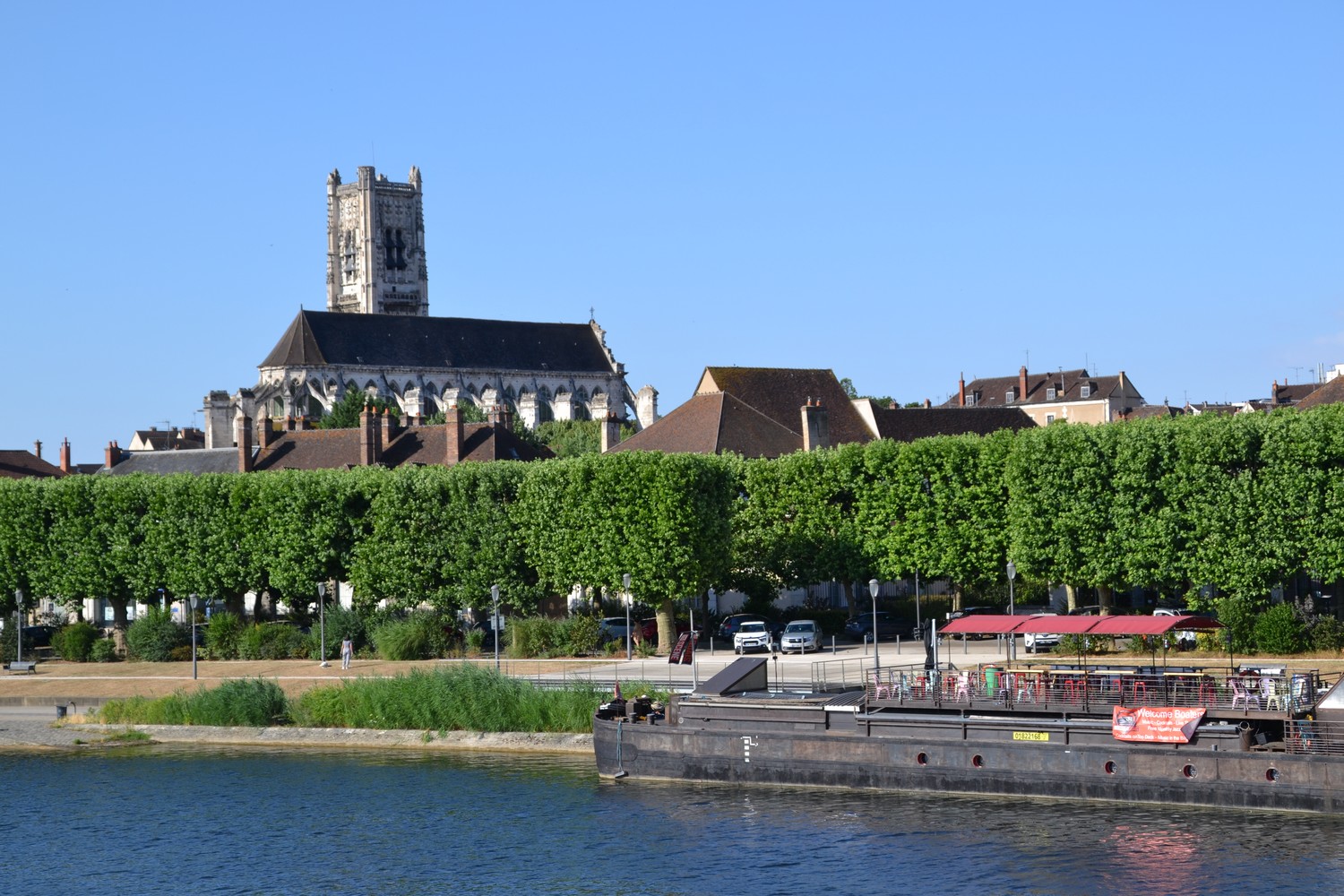
From the river, the Gothic tower of Saint-Pierre Church stands out clearly in the panorama of Auxerre’s old town. Originally a collegiate church, canons of the Order of Saint Augustine took up residence there in 1107. From the end of the 11th century, a new neighbourhood populated by wine growers and craftsmen grew up around this monastery, drawn by the expanding wine trade on the river. Wine growers were well established in the Saint-Pierre quarter. In the 13th century, the monastery gave way to a church. It houses statues of Saint Vincent and Saint Cartaud, patron saints of the wine growers and butchers of the quarter. Seen from the water, this church tells the story of a neighbourhood whose prosperity was intimately bound up with the vine and the river better than any other monument could.
THE MARINE QUARTER
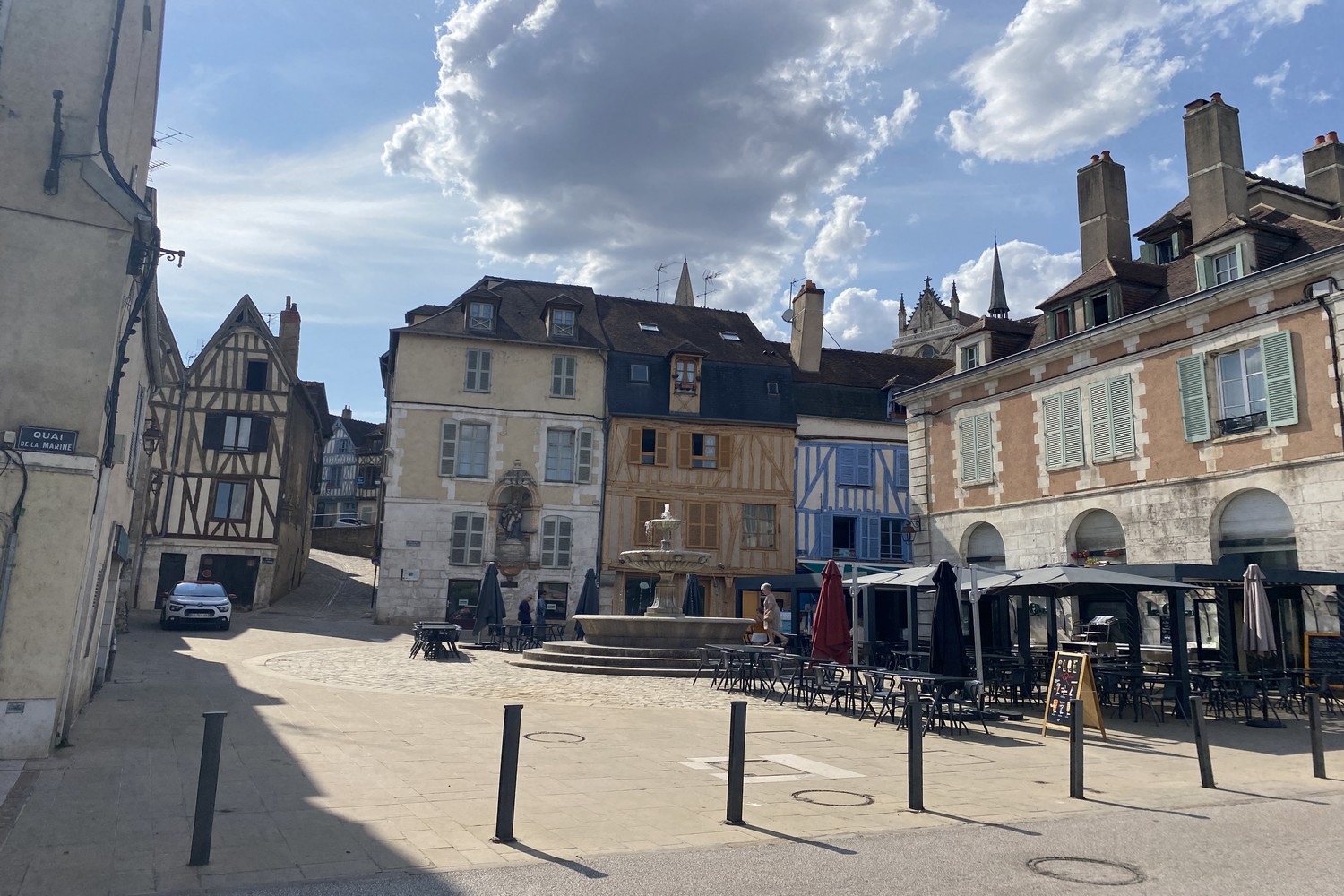
The Marine Quarter is one of the most historic in Auxerre. It takes its name from its earliest inhabitants: boatmen, merchants and river hauliers. Situated on the banks of the Yonne, it was also home to fishermen and tanners. Its winding lanes are lined with charming half-timbered houses. The quarter is centred around the Place Saint-Nicolas and the Place du Coche-d’Eau. The Chapel of Saint-Nicolas, a timber structure dating from the 17th century, is a reminder of the area’s river heritage. Today it is a popular spot for a stroll, with its terraces overlooking the Yonne. It makes an ideal gateway for exploring the old town of Auxerre.
THE PARC DE L’ARBRE SEC
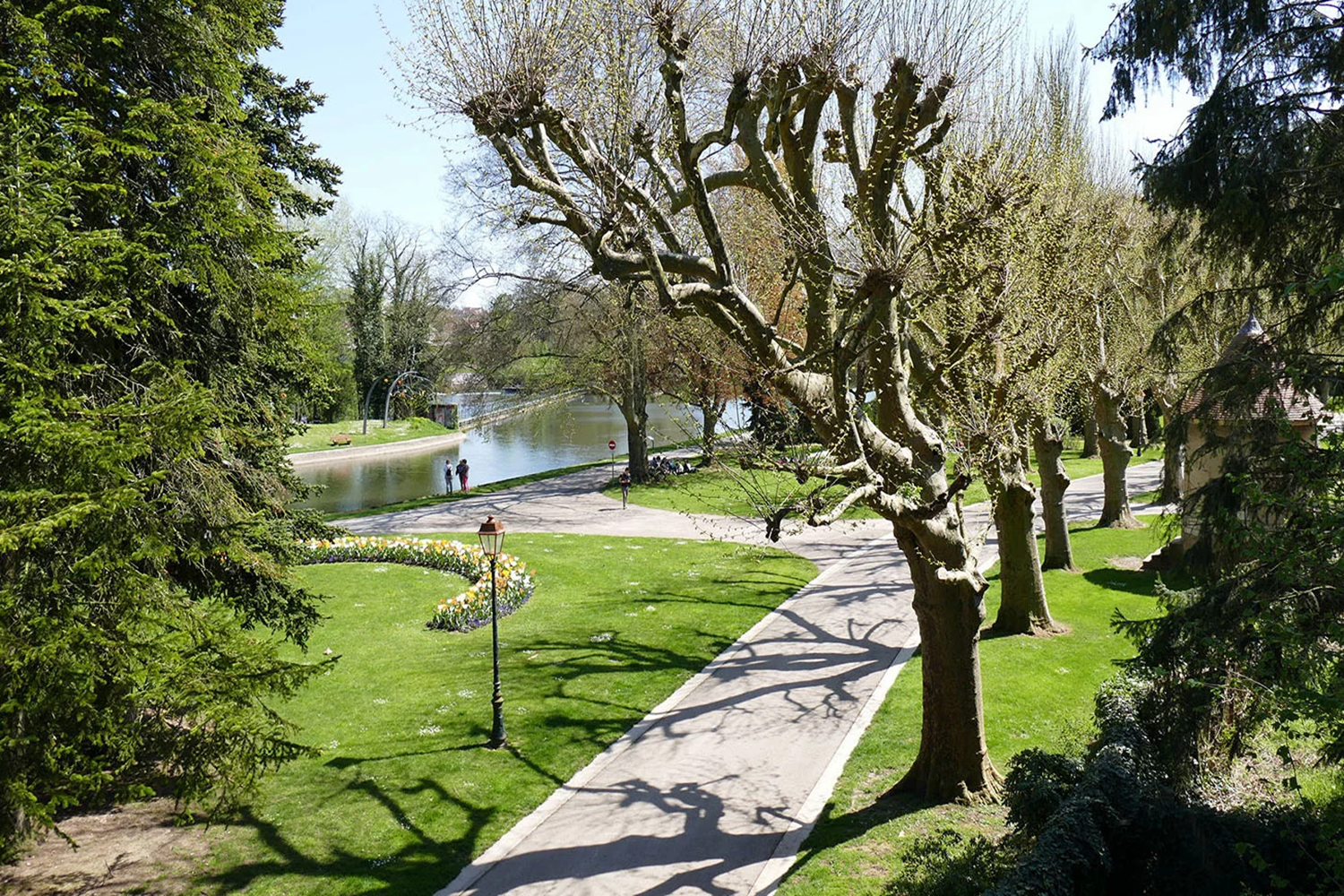
After leaving the historic heart of Auxerre by boat along the Yonne, the Parc de l’Arbre Sec gradually comes into view. The park stretches along the riverbank. It was laid out on a former marshy area bordering the Yonne. This 19th-century botanical garden is classified as a bird sanctuary and is planted with nearly 300 trees. An avenue of catalpas leads to the famous Arbre Sec that gives the park its name, and which is not far from the Abbé-Deschamps stadium, the iconic home ground of the AJ Auxerre football club.
AUXERRE AND THE BURGUNDY VINEYARDS
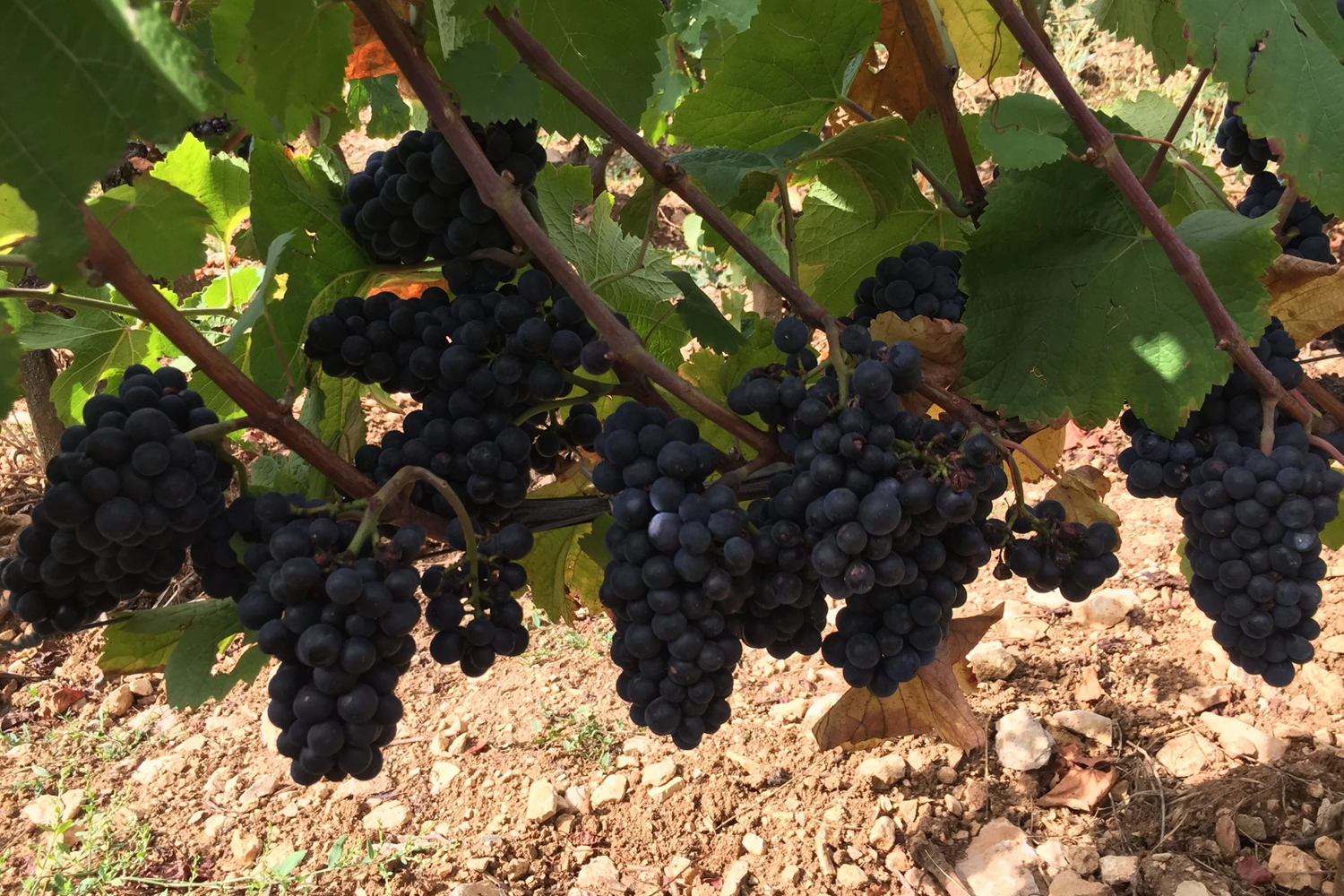
Leaving Auxerre by river, one enters the heart of one of the oldest vineyards in France. For centuries, the vineyards of the Auxerrois sent their casks of wine by river boat to Paris, to the north of France, and even by sea to the British Isles and the northern countries of Europe. Even in the first half of the 19th century, wine from Auxerre supplied the taverns of Paris and its suburbs. Most wine growers lived in the Saint-Pierre quarter, close to the Marine Quarter, the starting point for boats carrying goods to the capital. At the very heart of the town, one can still find the Clos de la Chaînette vineyard, a former estate of the monks of Saint-Germain Abbey which is considered one of the oldest vineyards in France. The principal appellations of the Auxerrois today are Irancy, Saint-Bris, Chitry, and Coulanges-la-Vineuse.